 Pre-Order
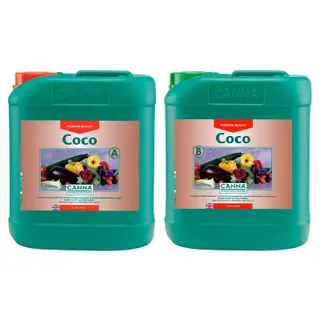
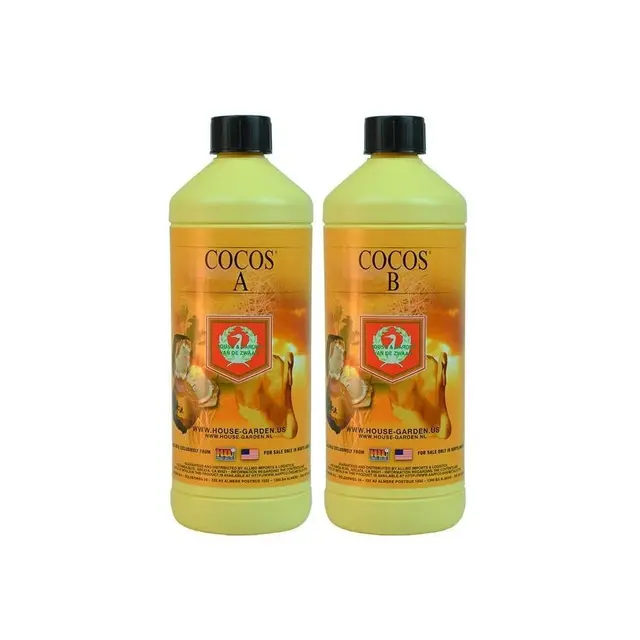
House & Garden Cocos
£13.46£14.95Save £1.49
Pre-order – we’ll dispatch when it arrives
Available from our Bristol shop
This item is too big for our parcel service, so we don't sell it for delivery on the website. Buy it in the shop, or contact us for a delivery quote.
In stock now: ·
Description
A 2-part nutrient designed as a base nutrient for coco growers.
Coco specific nutrients contain less potassium than other nutrients due to the high levels released by the coco medium. Humic and Fulvic acids improve the uptake and transportation which in turn will promote healthy plant growth and the absorption capacity of the root zone.
Do not add A & B parts at the same time, add A to your nutrient container; circulate the nutrient solution, then add B.
The suggested dilution rate is approximately 5ml per litre of water.
Key facts
| Type | Two-part (A & B) base nutrient for coco |
|---|---|
| Growing medium | Coco |
| Potassium | Lower than other feeds, because coco releases potassium itself |
| Contains | Humic and fulvic acids, to help uptake at the roots |
| Dose | About 5 ml per litre |
| Brand | House & Garden |
| Sizes | 1, 5 and 10 litres |
| Category | Base Nutrients |
How to use
The suggested rate is about 5 ml per litre of water.
- Add part A to your nutrient tank.
- Circulate or stir the solution.
- Then add part B.
Do not add A and B at the same time. Check the EC and pH of each feed with a pH and EC meter. See our coco coir range for growing media.
Questions
Why use a coco-specific feed?
Coco releases potassium of its own, so a coco feed has less potassium than a feed for soil or hydro.
Can I add A and B together?
No. Add A, circulate the solution, then add B.
Growers’ guides
- House & Garden Feed Chart: Aqua Flakes and Cocos Week by WeekThe House & Garden feed chart for Aqua Flakes and Cocos week by week, per US gallon and in ml per litre, with Roots Excelurator and Top Shooter.
- Which Nutrients for Soil, Coco or Hydro? Base Feeds ComparedWhich plant nutrients to buy for soil, coco or hydroponics: the base feeds we sell compared, Plant Magic or Biobizz, hard or soft water, and how to choose.
- Coco Coir Guide: Choosing, Feeding and Reusing CocoWhat coco coir is, the coco mixes worth buying, how it compares with clay pebbles and rockwool, and how to feed and reuse it.